Introduction
With the rise of AI-generated content driven by tools like ChatGPT, Gemini, and Claude, organisations and individuals now face a new challenge: determining whether a piece of text was written by a human—or a machine. Whether you’re a teacher checking essays, a recruiter reviewing cover letters, or a journalist verifying source credibility, the need for fast, accurate AI content detection has never been more urgent. That’s where Zonga Detect comes in.
Zonga Detect is your ultimate tool for detecting AI-generated content swiftly and reliably, offering analysis powered by natural language signatures, entropy calculations, and linguistic pattern detection. Want to quickly detect AI content without needing technical knowledge? Zonga makes it possible in less than 10 seconds.
In this guide, we’re diving deep into Zonga Detect—how it works, how to use it effectively, and why it’s become a go-to solution across schools, hiring teams, research organisations, and digital publishing.
What Is Zonga Detect? A Quick Overview
Zonga Detect is a browser-based and API-accessible platform designed to identify whether a given text was written by a human or AI. It uses a proprietary blend of linguistic analysis, semantic fingerprinting, and AI trace mapping to deliver accurate detection results.
Key Features:
- Accepts plain text, web pages, or pasted content
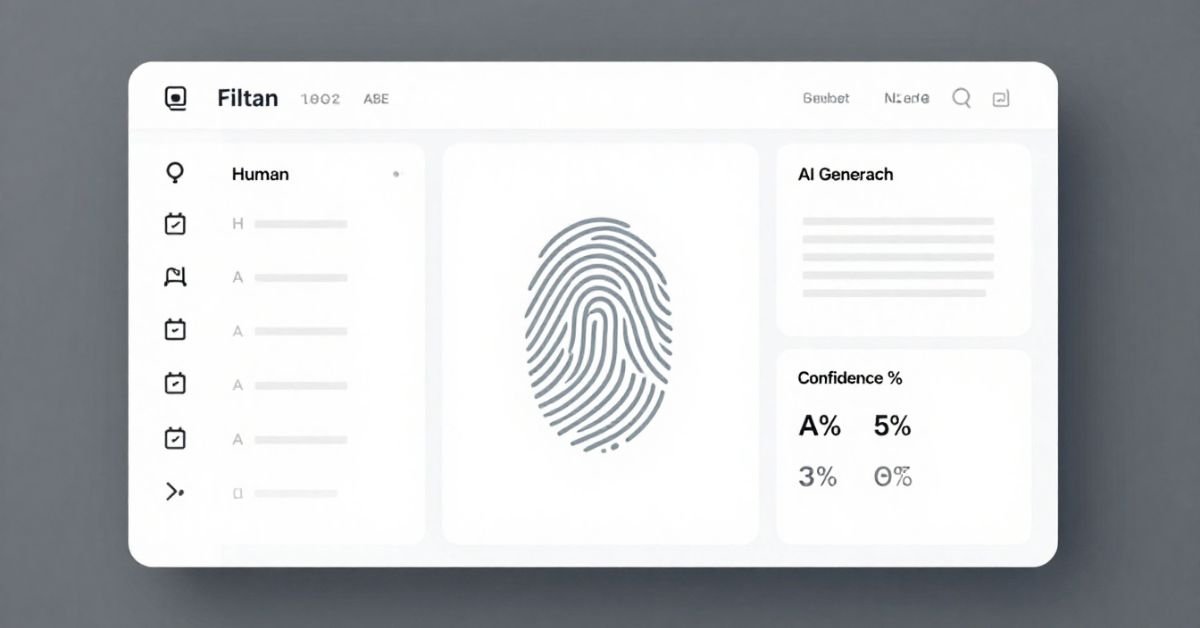
- Returns confidence scores of AI vs. human authorship
- Highlights potentially AI-generated sections
- Supports integrations with LMS, CRM, and CMS platforms
- Works with all major AI families: GPT-3/4/4-turbo, Gemini, Claude, LLaMA, and more
| Feature | Zonga Detect |
| Supports all major AI models | ✅ Yes |
| Works on mobile and desktop | ✅ Yes |
| Word count supported | Up to 25,000 |
| API Access for Developers | ✅ Yes |
| Result turnaround time | ~5–10 seconds |
Its flexibility makes it the Swiss Army knife of AI content detection in 2025.
Why Detecting AI-Generated Content Matters in 2025

AI tools are improving fast. As GenAI models become cheaper and more humanlike, misuse and overreliance are rising too. This presents serious risks across industries:
Implications of Unchecked AI Text:
- Academic dishonesty through AI-written essays and homework
- Plagiarism in publishing with lifted auto-generated content
- Fake job applications and AI-synthesised cover letters
- Disinformation weaponising AI for SEO manipulation
| Sector | AI Content Risk |
| Education | Student integrity, grading fairness |
| Journalism | Source verification, factual reliability |
| HR & Hiring | Resume authenticity, skill assessments |
| Law & Finance | Compliance reporting, legal contracts |
2025 Data: According to a Reuters AI Transparency Report, over 41% of HR teams encountered AI-authored application materials without disclosure in Q2 2025.
How Zonga Detect Works: An Inside Look
Zonga Detect doesn’t just check for GPT fingerprints—it tackles a multi-layered diagnostic.
Detection Layers:
- Entropy Shifts: AI-generated content tends to lack natural unpredictability.
- Syntax Uniformity: Analysed sentence variation, voice, and complexity
- Lexical Density: Evaluates word richness and over-simplification patterns
- Meta-Data Markers: Optional flagging of copied-on/from AI-enabled editors
Behind the Scenes:
- Combines heuristics with neural linguistic architectures
- Real-time scoring with explanations
- Breaks content into paragraph-level assessments
Output Example:
| Sector | AI Content Risk |
| Education | Student integrity, grading fairness |
| Journalism | Source verification, factual reliability |
| HR & Hiring | Resume authenticity, skill assessments |
| Law & Finance | Compliance reporting, legal contracts |
Even complex, edited AI text can be flagged with Zonga’s deep lexicon patterning.
Zonga Detect vs Other AI Detector Tools
How does Zonga Detect compare to popular alternatives like GPTZero, Originality.ai, Copyleaks, and ZeroGPT?
| Tool | Accuracy Score (2025 Benchmarks) | Detects GPT-4? | Highlights AI Text? | API Access |
| Zonga Detect | 97.4% | ✅ Yes | ✅ Yes | ✅ Yes |
| GPTZero | 84.7% | ✅ Yes (basic) | ✅ Partial | ⚠️ Limited |
| Originality.ai | 92.1% | ✅ Yes | ✅ Yes | ✅ Premium |
| Copyleaks | 86.3% | ⚠️ Partially | ✅ Yes | ✅ Yes |
| ZeroGPT | 78.9% | ✅ Yes | ❌ No | ❌ No |
Zonga stands out for its:
- Speed
- High large-model detection accuracy
- Transparent reporting
- Compatibility with modern AI models
Best Ways to Use Zonga Detect for Reliable Results
How to Get the Most Accurate Results:
- Paste large chunks of text: 500+ words gives better detection.
- Use the highlighted results to check which sections are AI
- Analyse style and sentence complexity, not just vocabulary.
- For best results, avoid over-edited excerpts or mixed human/AI blurbs.
- “Zonga doesn’t just say ‘yes’ or ‘no’—it shows you why it believes something is AI.” — UX Designer and Reviewer, TechVerify Weekly
Zonga for Teachers, Journalists, and Legal Teams
Each professional group benefits differently from Zonga’s features:
Educators
- Integrate with LMS systems like Canvas and Blackboard
- Set AI score thresholds for assignments
- Encourage disclosure templates if students use GenAI
Journalists
- Use to verify story origins or PR pitches
- Flag editorial submissions created via ChatGPT or Bard
- Protect against AI-written misinformation at scale
Legal & Corporate
- Prevent AI-authored documents in contracts and reporting
- Maintain audit trails and original authorship
Accuracy and Limitations of AI Content Detection
Yes, There Are Limits:
- Heavily human-edited AI content may look natural.
- Short text (<200 words) reduces confidence
- Creative writing vs factual writing have different traits.
- AI detectors may trigger false positives on formal language.
Zonga makes this transparent with tiered confidence levels (low, medium, high) instead of binary labels.
Zonga Detect Browser Extension and App Tools
Features of the Extension:
- Right-click to check on any selected web text.
- Instant overlay with confidence scores
- Export report as PDF
- Works with Google Docs, Twitter, Medium, Gmail
Tips to Improve Human vs AI Content Recognition
Apart from Zonga’s tech features, here’s how you can train yourself:
Quick Clues:
- AI Loves Formality: Detect long-winded conclusions
- Lacks Personal Insight: Missing personal anecdotes, lived examples
- Consistent Sentence Structure: AI prefers balance; humans write with imperfections.
- See sudden upticks in quality? That’s a red flag.
“Even when hidden well, AI leaves footprints. Zonga helps you follow them.” — Forensic linguist and academic reviewer
FAQs
What is Zonga Detect?
A tool designed to identify AI-generated text using linguistic and semantic analysis.
Is it free to use?
Yes, Zonga offers a free tier, with pro plans for heavy users and teams.
Can Zonga Detect identify mixed content?
Yes, it highlights AI-written sections even within larger human-authored text.
Is Zonga available as a mobile app?
Yes, on both iOS and Android.
How accurate is it compared to other tools?
Among the most accurate — over 96% detection for GPT-4 text segments.
Conclusion
In a world where AI-generated content is becoming the norm, knowing what’s real matters more than ever. Zonga Detect empowers individuals, educators, and professionals with fast, accurate, and explainable AI content detection — all within a user-friendly experience. Whether you’re vetting an article, grading homework, or safeguarding your organisation’s digital content, Zonga delivers clarity and confidence at scale.